Overview

Advance Cash

Building an AR financing platform from the ground up

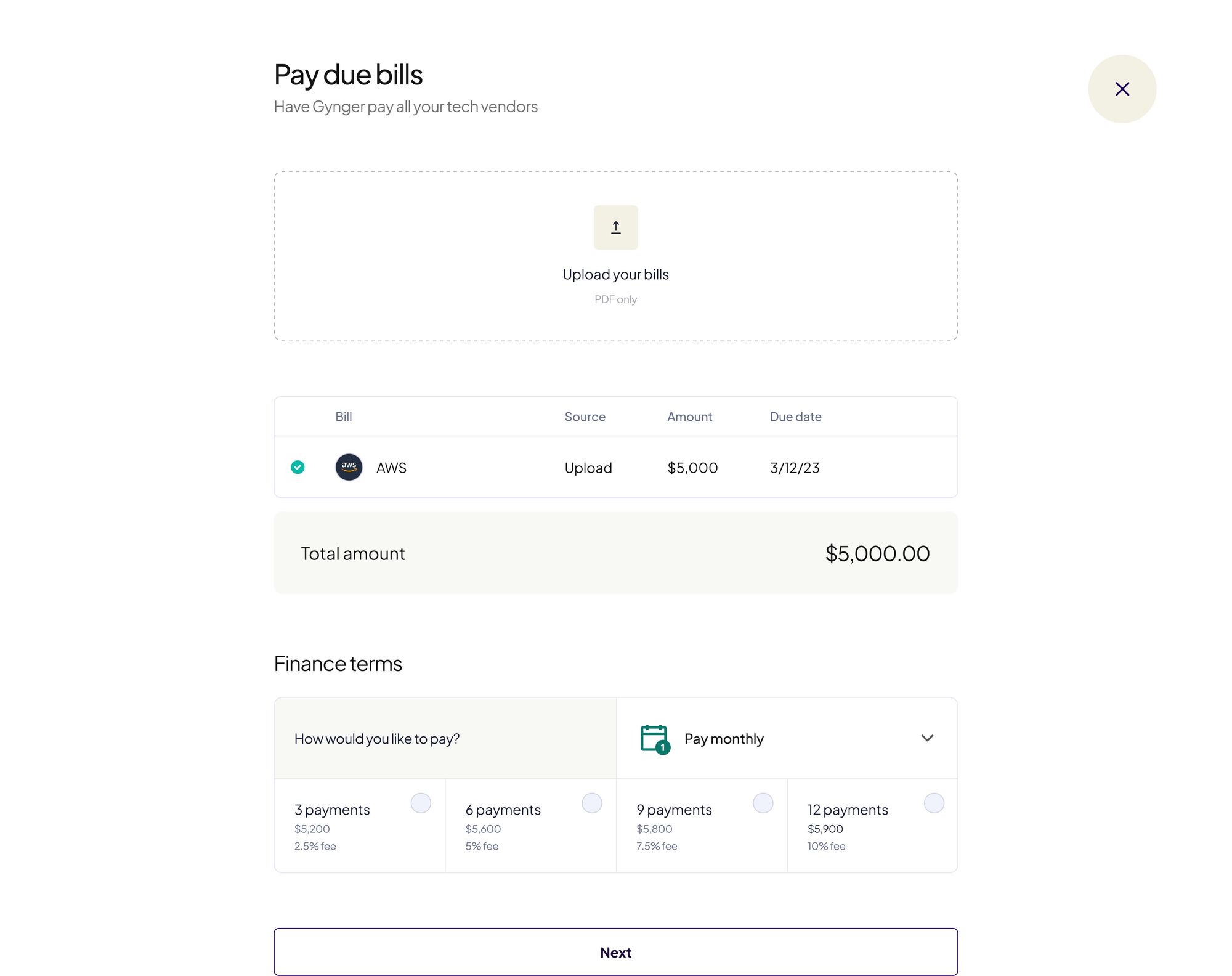
Designing Gynger's first AR financing product line as the sole designer

Gynger started as an accounts payable platform allowing companies to pay their software bills with optional financing. I led the design of the receivables side from zero, building the infrastructure that lets vendors advance against outstanding invoices without disrupting the terms their customers signed.

Discovery

Vendors needed cash flow now, but their customers needed flexible terms

Vendors were offering customers flexible payment terms to close deals and carrying those large outstanding receivables themselves. The platform had no way to advance against them. Building it meant going from one-sided transactions to a two-sided platform with all-new features: invoice ingestion, eligibility evaluation, advance origination, repayment tracking.

Designing for CFOs who share contracts with counsel before they sign anything

The primary user was a CFO or finance lead at a $5M–$100M ARR B2B SaaS company. Sophisticated, suspicious of complexity, transparent fee structures mattered more than aesthetics. The secondary user was the deal-closing VP sales who needed financing as a tool to unblock stuck deals.

CFO / Finance lead

Needs to see the full financial picture before committing
Shares contracts with counsel before signing
Suspicious of complexity; any confusion = deal abandonment
Values transparency on fee structures above everything

VP sales / Account executive

Wants to close the deal fast; financing is a tool to unblock
Frustrated by anything that requires explaining to the customer
Success = customer financed, deal closed, commission earned

Design Decisions

Surfaced AR as a dashboard, not a feature

Framed financing as ongoing working capital, not a one-time action. The dashboard surfaces eligibility status proactively; vendors see which invoices qualify before they apply, so the friction of "will this even work" is gone before they commit time.

Chose single-page loan origination over the default SaaS wizard

Research with CFOs showed they share contracts with counsel before signing and you can't share a multi-step interactive flow as a document. The single-page layout broke the default SaaS checkout pattern, but matched the actual user behavior. Conversion through the application step improved meaningfully after launch.

Built around fintech edge cases from the first design pass

Partial balances, mid-cycle advances, fee withholding: in fintech the "weird" scenarios are the scenarios that matter most for trust. Structuring the data model and the interface around these realities from day one avoided the typical fintech pattern of a clean happy path that breaks on the cases customers care about.

Outcomes

From blank Figma to 4.3% of fee revenue in under a year

Edge cases are the product, single-page beats wizards for shared documents, and design can drive product policy

4.3%

of total fee revenue in Q4 2025(up from ~0%)

+324%

originations QoQ growth

< 6 months

blank Figma → real business impact

Other Projects
1
Reducing time-to-completion in forms using agentive system

AI-native agent for transactions and credit underwriting @ Gynger

2
Increasing conversion through modern checkout pages

New features for SaaS e-commerce platform @ SamCart